
LAST WEEK’S KEY FACTORS AND MAIN TRENDS IN THE DEVELOPMENT OF THE SITUATION AROUND UKRAINE
(October 17-23, 2016)
I. Major-Profile Events in the Development of the Situation around Ukraine
Last week, an important factor in influencing the development of the situation around Ukraine was the resumption of the international dialogue on the ceasefire in Syria and resolving the conflict in the Donbas. In particular, it concerns the negotiations of Foreign Ministers of the USA, Russia, Turkey and Qatar on the 15th October 2016 in Lausanne, as well as the meeting of the “Normandy Four” at the highest level on the 19th October 2016 in Berlin. The above-mentioned was the result of the intentions of all parties concerned to implement their current interests, which include:
For the US and European countries — reducing the level of tension in Syria and in the East of Ukraine to prevent strengthening spreading of instability to Europe (first of all, sharpening of the “migration” crisis). Besides, demonstration of progress in resolving conflicts is extremely important for the leaders of the USA, Germany and France with the approach of elections in their countries;
For the Russian Federation — to create preconditions for lifting of Western sanctions against Russia, which is becoming increasingly important for V. Putin’s regime as the Russian economy deteriorates.
At the same time, the beginning of a peaceful dialogue was preceded by a difficult period of significant aggravation of confrontation between Russia and the West, which was accompanied by strengthening of mutual pressure. Within the framework of such pressure on the USA and Europe, Moscow has activated the fighting in Syria and in the East of Ukraine and moved to the open blackmail of Western countries and international organizations, including in the military and nuclear spheres.
In response, the United States, United Kingdom, Germany, France, Italy and other European countries as well as the EU and NATO leaders expressed a sharp condemnation of Moscow’s actions and their intentions to strengthen sanctions against Russia and to initiate an international investigation of its actions in Syria as war crimes. In this regard, of decisive importance were the meetings of US Secretary of State J. Kerry and British Foreign Minister B. Johnson on 16 October, 2016 in London, as well as of the Foreign Ministers of EU member states on October 17, 2016 in Luxembourg, at which the United States and the European Union confirmed in categorical terms the above–mentioned intentions regarding Russia.
In fact, all this forced Russia to go to the peace talks, as well as to reduce the intensity of fire in Syria and in the Donbas. At the same time, due to Moscow’s and the West’s fundamentally different approaches to resolving the Syrian crisis, as well as Russia’s and Ukraine’s absolutely different approaches to settling the conflict in the Donbas, the peaceful dialogue is so far symbolic.
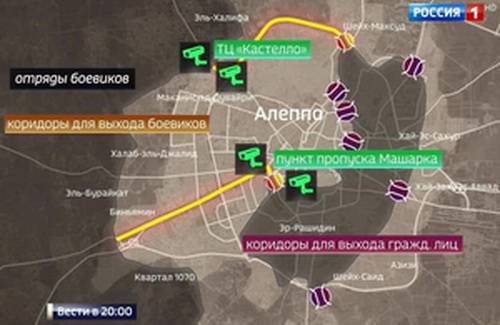 Thus, instead of real actions to bring peace and prevent further deterioration of the humanitarian disaster in Syria, Moscow only demonstrates such intentions by announcing the so-called “Humanitarian pause” to “enable the civilian population and the rebels to leave the city of Aleppo”. However, such a ‘possibility’ causes a very reserved attitude of both residents and members of the opposition armed groups, due to the Ilovaysk and Debalcevo experience when the guaranteed by Russia “humanitarian corridors” for the exit of the ATO forces were used by the Russian side as a trap for Ukrainian troops.
In turn, the major achievement of the meeting of the “Normandy Four” was an agreement to develop a “road map” for implementation of the Minsk Agreements, which should determine the procedure for implementation of the whole complex of political and security issues. At the same time, Russia continues putting forward unacceptable for Ukraine demands, especially regarding the implementation by our State of the political aspects of the peace process prior to settling the major security problems. In a way, this position of Russia’s is also supported by Germany and France.
Given the above-said, further development of international dialogue on Syria and Ukraine will be long, complex and quite controversial. At the same time, absolutely possible is another failure of the negotiating process, both on Syria and on the Ukrainian issue. This will inevitably lead to an aggravation of the armed conflict in Syria and in the Donbas.
 Evidence of such a threat is not only the preservation but also the strengthening of the Russian military presence in Syria and around it, as well as in the occupied territories of our State. On 15th October 2016, a Surface Action Group of the RF Northern Fleet began its passage into the Eastern part of the Mediterranean Sea. The group consists of the “Admiral Kuznetsov” heavy aircraft-carrying cruiser, “Pyotr Velikiy” heavy nuclear missile cruiser, “Severomorsk” and “Vice-Admiral Kulakov” large anti-submarine ships and support vessels. The Surface Action Group’s arrival at Syria’s coasts will enhance the potential for conflict in the region.
II. Russia’s Armed Aggression against Ukraine
2.1. The East of Ukraine (The ATO Zone)
Against the background of the meeting of the “Normandy Four” in Berlin, the Russian-terrorist forces to some extent reduced the intensity of the shelling of positions of the ATO forces and civilian settlements in the Donbas. However, the shelling never stopped, especially in certain areas of disengagement of forces. In particular, Stanytsya Luhanska was fired from various types of weapons. Sabotage and reconnaissance groups of the enemy worked there too. After the meeting, at the end of last week the Russian-terrorist forces again intensified fighting in the Donbas, first of all in the direction of Mariupol.
 The above-mentioned confirms the conclusion of the Representatives of the OSCE Special Monitoring Mission regarding Russia’s having no real intentions to withdraw its troops and armed groups of militants to the agreed line. Moreover, it continues activities to strengthen the Russian-terrorist forces in the occupied territories of Ukraine and engineering equipment of their positions. At this, under various pretexts, the Russian side creates obstacles in the work of the OSCE observers.
At the same time, Russia and its puppets in the Donbas again tried to shift to Ukraine the responsibility for the violation of ceasefire in the conflict zone in the East of our country. Thus, the leader of the “DPR” terrorist organization A. Zakharchenko saw Ukrainian President P. Poroshenko’s statement about the possibility of implementation of the political part of the Minsk Agreements only after ensuring the security in the Donbas as “Kyiv’s breaking the peace agreements and starting a new round of fighting”.
At the same time, Russia continues cynical attempts to show “Moscow’s leading role in the conflict in the Donbas”. October 17, 2016, the head of the International Affairs Committee of the Federation Council of the Russian Federation K. Kosachev pointed out “Russia’s being interested in restoration of the territorial integrity of Ukraine”. According to him, “to the extent possible, Russia has already implemented a number of measures in the direction of restoring Kyiv’s control over the Donbas”. Evidence of this was called “Moscow’s influence on the positions of the South-East of Ukraine in terms of assuring it of the need to abandon the question of its separation from the Ukrainian state”.
One of the arguments of such an “assuring” is the continuation of physical destruction of the most notorious terrorist leaders of the so-called Donetsk and Luhansk People’s Republics. For example, after the assassination of the former Commander of the “Prizrak” (“Ghost”) Brigade in the “LPR” A. Mozgovoy in May 2015 and of the former leader of the “Oplot” group in the “DPR” E. Zhilin in September 2016, the next step in this direction was the elimination of another field commanderof militants in the “Donetsk People’s Republic” — a citizen of Russia Alexandr Pavlov (known by the nickname “Motorola”) October 16, 2016, in the Russian-occupied Donetsk. It is absolutely predictible that the next victims of the attacks may be odious leaders of the occupying authorities of the “DPR” A. Zakharchenko and D. Pushilin, and of the “LPR” — V. Plotnytskyi.
2.2.The Crimean Peninsula
The United States and the EU’ s threats to strengthen sanctions against Russia both, over the Syrian and Ukrainian issues, make Putin’s regime look for opportunities to justify its actions in Ukraine, including on the annexation of the Ukrainian Crimea. According to the head of the Federation Council V. Matviyenko, “…the deployment of Russian troops in the Crimea was caused by the need to avoid bloodshed on the Peninsula, as it was in the Donbas”. However, she has accused Ukraine of intentions “…to attack the Crimea in the spring of 2014 and to capture the naval base with further passing it over to NATO (?)”.
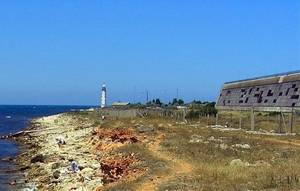 At the same time Russia continues militarization of the Crimean Peninsula. In particular, near Sevastopol Russians are restoring a rocket warning radar (was once part of the USSR’s radar unit of the AD). According to Russian experts, putting the station into operation will allow Russia to maintain control over the missile launches and flights of the aircraft in the sector from the Indian Ocean to the Middle East and North Africa.
At the same time, the Crimean issue has become a subject to B. Assad regime’s political speculations. Thus, on 20 October 2016, the head of the Syrian parliament H. Abbas recognized the Crimea “an integral part of Russia”. At this, she stressed the strategic nature of relations between Syria and Russia.
In contrast, during the opening of the academic year at the University of Rize, Turkey’s President R. Erdogan reconfirmed Ankara’s firm position on supporting “Turkish compatriots” in the world, including the Tatar population of the Crimea. At the same time, R. Erdogan put the Crimea in a row with Syria, Libya, Iraq and Afghanistan. Earlier, Turkish President had repeatedly stated about Ankara’s non-recognition of “legitimacy” of Russia’s annexation of the Ukrainian Crimea, despite some improvement in Turkish-Russian relations.
2.3. Other Aspects of the Russian Federation’s Actions against Ukraine and the West
Despite the resumption of peace negotiations on the Syrian and Ukrainian issues, Russia continues blackmailing Western countries and international organizations, and demonstration of its military force to them.
Thus, after Russia’s withdrawal from the agreement with the US on the processing of weapons-grade plutonium and deployment of Russian “Iskander-M” tactical missile complexes in Kaliningrad region of the Russian Federation, Moscow has accused Washington of violating a treaty on intermediate-and shorter-range missiles. According to the Director of the Department on non-proliferation and arms control of the Russian Foreign Ministry M. Ulyanov, evidence of such violations is the “placement of target missiles, drones and MK-41 anti-missile launchers on the territory of Romania”. Taking into consideration the past experience, Moscow’s accusing other countries of violation of international treaties, usually preceded Russia’s exit from them, and were used by it to justify such steps.
Against this background, on 19-20th October 2016, near Luga of Leningrad region of Russia (about 100 km from the border with Estonia) were conducted exercises on the deployment of an “Iskander-M” missile complex from the 26th Missile Brigade of the Western Military District of the Russian Federation’s Armed Forces.
 However, in the period from October 17 to October 20, 2016, at the Brest training field in Belarus (near the borders of Ukraine and Poland) the two countries held the joint exercises of the Russian-Belarusian airborne troops. From Russia in the exercises participated the Battalion Tactical Group of 331th Guards Airborne Regiment of the 90th Guards Airborne Division (Kostroma), from Belarus — a unit of the 38th Separate Guards Air Assault Brigade (Brest). In total, the exercises involved about a thousand of Russian and Belarusian military servicemen and more than 150 pieces of military equipment (including 62 BTR-80).
According to the Department of Information and Mass Communications of the Russian Federation’s Defense Ministry, during the exercises the military had practiced counter- sabotage actions to detect, block and destroy illegal armed groups in the border area of the Belarus-Russia Union State.
However, judging from the international political background of the exercises, their actual purpose could have been Russia’s preparing offensive operations against Ukraine from the North (including to create a controlled by Moscow buffer zone between Ukraine and NATO / the EU), and against Poland in case of an armed conflict between Russia and NATO.
At the same time, similar exercises were held in the region of Ryazan with the participation of the Battalion Tactical Group of the 137th Parachute Regiment of the 106th Guards Airborne Division of the RF Armed Forces and a unit of the 103rd Guards Separate Airborne Brigade (Vitebsk) of the Armed Forces of Belarus.
In general, these circumstances show the true nature of the Putin regime’s positions, which only demonstrates its readiness for peace, but in fact — continues aggressive policy against Ukraine and the West.
III. Ukraine, International Organizations and Leading Western Countries
3.1. International Organizations
 The European Union. October 20-21, 2016, a next EU summit was held in Brussels. The participants discussed the EU policy towards Russia, the problem of the “migration crisis” in Europe, prospects for easing visa regime with Ukraine and a number of other issues. The summit also condemned Russia’s actions in Syria and Ukraine, and also pointed out the danger of Moscow’s strategy for weakening Europe. In particular, among the main directions of such a strategy were mentioned the Putin regime’s interference with political processes in the EU, espionage, cyber-attacks on the European cyber network and violation of air and maritime borders of the European Union.
These accusations were reflected in the final resolution of the summit. However, Italy blocked the inclusion into the document of a provision on the “sanctions against Russian companies and officials closely associated with the regime of B. al-Assad”. Instead, it expresses “the EU’s intentions to consider all possible options in connection with atrocities going on in Syria”. Within the framework of countering further worsening of the “immigration crisis” in Europe, additional measures are planned to be taken to strengthen the EU’s external border and the control over migration flows (in particular, in terms of revision of the Schengen Borders Code).
Touching upon the Ukrainian issue, the summit participants declared a possibility of making a final decision on visa facilitation between the EU and Ukraine in November 2016.
 NATO. The Alliance’s long-standing position with regard to Russia has been confirmed by the Minister of Foreign Affairs of Canada, C. Dion. According to him, all NATO members collectively provide a powerful deterrence of Putin’s regime by all possible means, including by strengthening the military presence of the Alliance in the countries of Central and Eastern Europe and in the Baltic States under the decision of the Warsaw Summit of the Alliance of July this year ( among other things, Canada sends 500 military servicemen with military equipment and weapons into the Battalion Tactical Group of the Alliance in Latvia).
In turn, in response to the Russian Armed Forces’ increased activity in the north-western regions of Russia, the Nordic countries and the Baltic States continue to take measures to strengthen their own security measures. In particular, the Department of Tallinn’s Municipal Police (Estonia) has created a special working group with the task of developing and implementing a plan for a crisis response in case of a military situation in the city.
3.2. Leading Western Countries
 The USA. October 19, 2016, in the USA there was the third round of televised debates between the main candidates for presidency — Democrat H. Clinton and Republican D. Trump. During the debate, the parties focused on criticizing mistakes of each other, and in fact did not raise issues of the current military-political situation in the world. According to the results of sociological surveys, H. Clinton is by 13 % ahead of D. Trump (earlier the figure was 7 %).
The election campaign in the United States becomes an additional factor in the complications of the US-Russian relations. According to the Chief of the US National Intelligence J. Clepper’s statement of 20 October, 2016, the US intelligence agencies have all the necessary evidence of Russia’s involvement in the hacking attacks on US political parties’ servers. According to the report of the US intelligence community, the hacking of servers and disclosure of information is intended to put influence on the results of the presidential elections in the United States in favor of the Russian Federation.
Considering the above-said, the authorities of several American states have decided to ban the presence of Russian observers at the presidential elections in their regions.
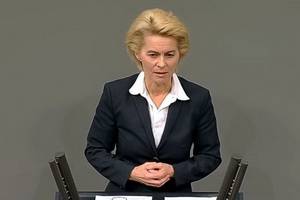 Germany. Germany’s leadership expresses a willingness to increase the country’s role in ensuring security in Europe, both within the framework of NATO and in increasing personal responsibility for the situation in the region. The Minister of Defence of Germany U. Leyen during a conference at the Ministry of Defense of Germany on October 17, 2016 said that the necessity of this is caused by increased threats from the aggressive policy of Russia, as well as by the sources of instability in conflict zones in the Middle East and North Africa. In view of the above-mentioned circumstances, U. Leyen stressed the need to focus Germany’s efforts on the protection of the eastern and southern borders of the EU and NATO.
As part of the practical implementation of these intentions, by 2020 it is expected to increase defense spending in Germany by total 10 billion Euros that will be spent on buying arms and increasing the number of the German Armed Forces.
IV. Other important trends and developments that affect the national interests of Ukraine
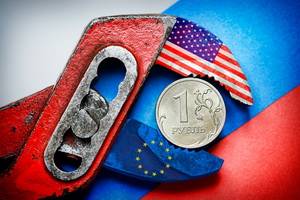 In this situation, a significant problem for Russia is the continuation of the Western sanctions. Thus, according to the RF Ministry of Finance, due to the impossibility of getting western loans, as well as decrease in revenues, to date, almost half of Russian banks has negative equity and is on the verge of bankruptcy. At the same time, the Central Bank of Russia does not have sufficient funds to support them and to insure natural and legal persons’ deposits.
However, due to the problem of the Russian state budget deficit, as well as to the Russian Government’s forced use of the Pension Fund to support the country’s economy, they are considering an issue of amendments to the system of pensions of Russian military servicemen. In particular, representatives of the RF Ministry of Finance offer options to reduce pensions (they have already terminated their indexation) as well as of beginning paying pensions to persons who have completed military service, only after they have reached the maximum retirement age provided for by the Russian law for civilians. The introduction of this order would inevitably undermine the prestige of military service in Russia, as well as reduce the level of motivation of Russian military servicemen to actions in conflict zones, including in the East of Ukraine.
V. Main Trends in the Development of the Situation around Ukraine in the Future
5.1. Key Events and Trends that Will Be Most Important for Ukraine
In the nearest future, the key factor of influence on the interests of Ukraine will be the results of the presidential elections in the USA in November 2016.
 In the words of the Foreign Policy Adviser to the Candidate from the Democratic Party of the United States H. Clinton, Laura Rosenberger in her interview with “Voice of America”, in the case of their “team”’s coming to power, the main directions of the new US administration’s actions will remain unchanged. First of all, this will involve ensuring national interests and security of the United States of America, as well as strengthening transatlantic relations and NATO.
In this context, Ukraine will remain one of the main priorities for the United States. Thus, Washington will preserve its attitude to Russia’s armed aggression against Ukraine as to a key violation of international law undermining the entire global system of security that is a threat to the security of the United States. With this in mind, the United States will continue its full support to Ukraine, as well as the policy of deterring the Putin regime.
Among the key elements of such a policy, she mentioned H. Clinton’s readiness to continue and strengthen sanctions against Russia, as well as her firm positions on the need to punish all those responsible for the destruction of the Malaysian passenger plane Boeing-777 on 17 July, 2014 over the conflict zone in the Donbas. Besides, she stressed the possibility of H. Clinton’s making a positive decision on providing Ukraine with lethal weapons.
All this opens positive prospects for Ukraine’s getting the status of a US ally outside NATO, which would be of strategic importance for our country.
5.2. Prospects for the Development of Events in the Conflict Zones in Ukraine
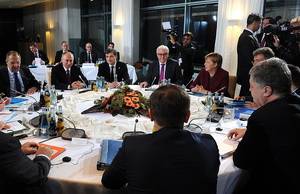 Based on the decisions of the leaders of the participating countries of the “Normandy Four” of 19 October, 2016, in the nearest future the situation in the conflict zone in the East of Ukraine will be determined by the progress and results of a special group to develop the “road map” for implementation of the Minsk Agreements.
Thus, if such results satisfy V. Putin’s regime, the Russian side will reduce the activity of hostilities in the conflict zone in the Donbas to the minimum level that will allow it to maintain a controlled “instability” (tension) in the region. Due to this, Moscow will demonstrate “commitment to the peace process in the East of Ukraine” (as a prerequisite for lifting of Western sanctions) and, at the same time, will continue putting pressure on Ukraine and exhausting its resources.
On the other hand — Russia may resume both, the fighting in the East of Ukraine, and the subversive and terrorist activities throughout its territory, in order to force our country to carry out exactly the Russian conditions of the “settlement” of the conflict. As in the past, such actions of Moscow will be accompanied by a massive information campaign with accusing Ukraine of “violation of the Minsk Agreements.”
Taking into consideration the fundamental disagreements between Ukraine and Russia in the approach to resolving the conflict in the Donbas, one should expect the development of the situation according to the second scenario. Evidence of this is another escalation of the armed conflict in the Donbas immediately after the meeting of the “Normandy Four” in Berlin.
5.3. Other Important Events that Will Have an Impact on Ukraine’s Interests and Security
Other important events that will have an impact on the security of Ukraine may be the actions of Russia’s subversive and terrorist groups, aimed at critical facilities (first of all, energy and transport ones) infrastructure on the whole territory of our country in the autumn-winter period.

